24 God is spirit, and those who worship him must worship in spirit and truth.”
– John 4:24
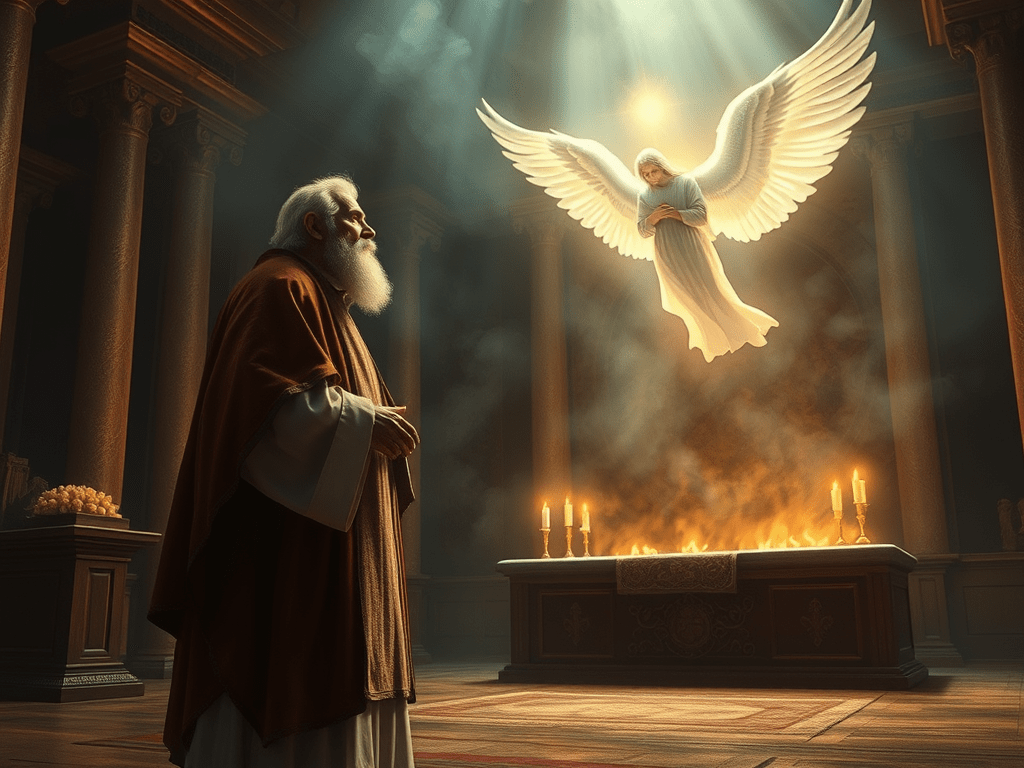
The fourth question of the Westminster Catechism asks “What is God?” Have you ever pondered what God might look like? We often have the image of God being an old white man that sits up in the clouds sending lightning down whenever we do something bad. But that is merely an gnostic mix-up with the image of the Greek god Zeus. He is neither white, black, blue, purple. Nor is he an old man or a young child. Before we can say whether God exists or whether he doesn’t, we have to first take a step back and wonder – if he does exist, then what is he? To understand who and what God is, we have to begin to understand his nature, and also what he is not.
The Westminster Catechism’s answer tells us that “God is a Spirit, infinite, eternal, and unchangeable in his being, wisdom, power, holiness, justice, goodness, and truth.” Stephen Charnock, the author of The Existence and Attributes of God writes: “God is a Spirit. He hath nothing corporeal, no mixture of matter, not a visible substance, a bodily form.” This means that God is immaterial. He is not someone one or something we can limit to physical guesswork or theory, nor can creation such as ourselves begin to fathom or understand the magnitude of how limitless God really is.
This news ought to be of greatest comfort for all of us who understand that God is beyond the material limitations in this world. His plan is greater for us than we could fathom, and his purpose for us stretches further and deeper than we could ever comprehend or experience.
Such a God became flesh, and became sin, in order that he should make us holy and blameless before him. God – the ultimate of existence and beyond existence – did this for us. When troubles run out of control, when pain runs so deep we couldn’t figure out how to make it go away, trusting God means acknowledging the unfathomable power in his name that goes beyond all of it.
But how many times have we put a limit on what God can do in our lives? We often say “Can God really do this for me? Why didn’t he answer my prayers? How would he solve my problems?” These are not only questions we have for God, but also statements that whatever obstacle it is, God couldn’t possibly help me to overcome them. If we believe in a God that is infinite, and limitless in his very existence – then it may be a start to genuinely acknowledge that truth.
Today, may you find peace and comfort in knowing that such a God, loves you and has a purpose for you beyond what you may be able to comprehend at this point in time. May this thought run deep into your heart and come to a place of awakening to understand just how wonderful our God is and that it may give you everlasting joy even in the midst of the worst.





 T H E O P H I L U S
Leave a comment